Popkenchurch
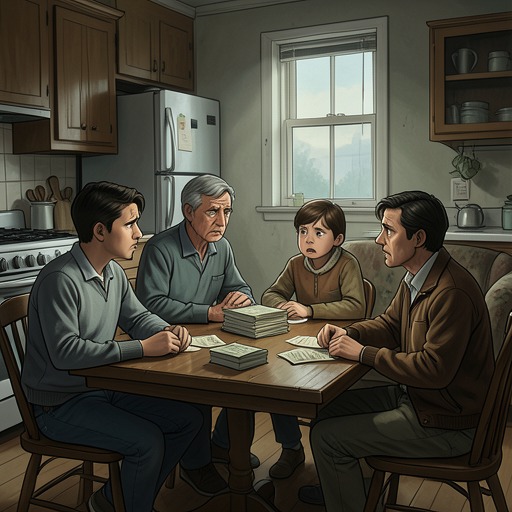
On the Come UpPopkenchurch is a takeout meal and, more significantly, a family signal that something bad has happened. Jay assembles it when she is upset; Brianna knows the pattern well enough to recognize the meal before she knows its cause. Its ordinary ingredients carry the weight of distress Jay has not yet put into words.
Meaning and Composition
The name combines food from three fast-food restaurants: fried chicken and Cajun rice from Popeyes, biscuits from KFC, and fried okra and corn on the cob from Church’s. On one occasion, Jay sets out the okra, corn, and soft, fluffy biscuits as part of the meal. The dish is therefore not a single restaurant order but a deliberate assortment, with each part contributing to the family’s customary spread.
Trey calls Popkenchurch “pre–cardiac arrest,” a joke about the meal’s richness. The family’s own understanding, however, is more serious than its comic name or the food itself. Brianna describes the meal as problematic not because of any digestive consequence, but because Jay serves it when something is wrong. Humor gives the dish a casual surface; its recurrence gives it emotional force.
A Pattern of Bad News
Brianna recalls several occasions when Jay bought Popkenchurch in response to upsetting circumstances. A couple of years earlier, Jay served it after telling the family that her aunt Norma had terminal cancer. The previous Christmas, she bought it when she realized she could not get Brianna a new laptop. She also turned to the meal when Grandma decided not to move out of state to help her sister recover from a stroke. These examples make the dish a repeated response to grief, disappointment, and family strain, rather than a one-time tradition tied to a particular celebration.
The pattern gives the meal a kind of advance warning: before the family knows what has happened, Popkenchurch suggests that Jay is carrying bad news or frustration. Brianna remembers Jay’s anger appearing in the way she handled a chicken thigh after Grandma’s decision. That detail makes the meal more than a comforting response; it also registers feelings Jay may not otherwise express directly.
Recognition and Family Communication
At dinner, Jay begins to reassure Brianna that the problem is nothing for her to worry about, but Brianna notices the meal and asks what is wrong. When Jay does not tell her, Brianna brings the clue to Aunt Pooh: something has happened, but Jay will not say what. Asked why she thinks so, Brianna answers that Jay bought Popkenchurch. Aunt Pooh recognizes the food but first responds by asking why Brianna did not bring her a plate. Brianna points out that Jay only buys it when something is wrong.
The exchange shows how the dish works within the family: Brianna can read Jay’s habit, and she expects Aunt Pooh to understand its significance too. The signal does not disclose the trouble itself, and it does not ensure that Jay is ready to talk. It does, however, give Brianna grounds to question the silence rather than accept the reassurance that there is nothing to worry about.
Recurrence Under Uncertainty
Later, after Brianna has been restrained at school, she hears that a call has come for her and immediately remembers Popkenchurch. Jay’s habit turns the food into a way for Brianna to imagine a possible crisis even when she has no confirmation of one. She worries that Jay may have lost her job, then tries to dismiss the possibility by supposing that the school has called the wrong place. The scene does not establish that the meal caused the call or explains what the call concerns; it shows how powerfully Brianna has learned to associate Popkenchurch with bad news.
Across these moments, the dish links domestic routine to the family’s uncertainty and hardship. A mixed order of familiar foods can signify news about illness, a financial disappointment, or a painful family decision without naming which kind of trouble has arrived. Its significance lies in that combination of specificity and incompleteness: the meal tells Brianna that something is wrong, while leaving her to discover what.